
Day 1 · Facilitation Skills: Running a Workshop That Actually Produces Decisions
Why Most Workshops End in a Nod, Not a Decision
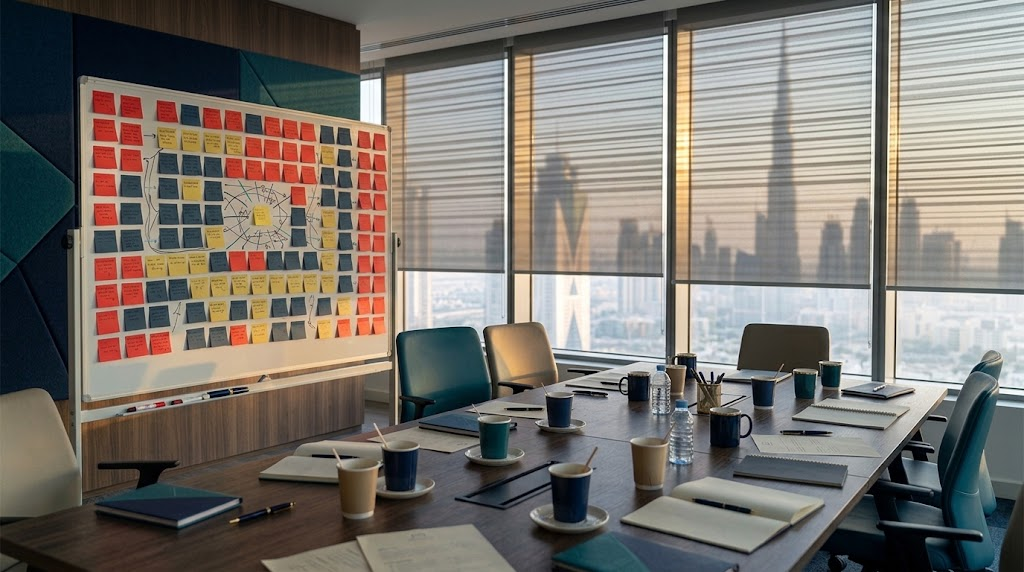
I once sat through a two-hour workshop that everyone in the room agreed went well. Good energy, a whiteboard covered edge to edge, nobody checking their phone under the table. Three weeks later, on a follow-up call meant to confirm next steps, it became clear that four people who had been in that room walked out with four different ideas of what had actually been decided. Nobody had lied. Nobody had been paying poor attention. The workshop simply did what most workshops do by default: produce agreement inside the room and nothing durable outside it. Agreement and decision feel similar while you are sitting in a chair together, and they are not the same thing at all.
A nod is cheap. A decision is expensive.
A nod costs nothing to give. It requires no commitment, closes no door, and can be silently walked back weeks later with no one able to point to the moment it changed, because nothing was ever written down in a form specific enough to argue with. That is exactly why rooms produce so many of them. Nodding along is the path of least resistance in a group of people who mostly want the meeting to end on time and without conflict.
A decision is expensive in a very specific way: it closes something off. Once a room decides that the loyalty program ships without the point-transfer feature, that option is gone, at least for this release, and someone who wanted it has to sit with that. Closing a door in front of the person who wanted it open is uncomfortable, and a lot of what passes for facilitation is actually a set of habits for avoiding that exact discomfort.
How a room produces a nod without meaning to
This rarely happens because a facilitator is careless. It happens because a facilitator is being generous, and generosity in the wrong place is what erodes a workshop's actual output. Someone raises a concern, the room does not want to spend the last twenty minutes arguing it out, and the facilitator, trying to keep things moving and everyone comfortable, offers something like, "Good point, let's take that away and think about it." Everyone nods. The meeting ends on time. Nothing was decided, and the ambiguity simply moved from the whiteboard into three or four people's heads, where it will sit unresolved and quietly diverge.
THE MOMENT A DECISION QUIETLY DISAPPEARS
Stakeholder:
I still think we need the point-transfer feature in this release, not next one.
Facilitator:
That's a fair concern; let's flag it and revisit.
Stakeholder:
Sure, sounds good.
That exchange feels polite and reasonable in the room. It is also exactly how the workshop from my story ended up with four different readings of the same conversation. "Flag it and revisit" was heard as "parked for later" by two people and as "basically agreed, just not written down yet" by two others, and nobody in the room caught the gap, because on the surface everybody had just agreed.
What a workshop is actually for
A workshop is not a meeting that happens to have sticky notes in it. Its entire reason for existing, instead of an email thread or a document sent around for comments, is that certain decisions genuinely need the right people in the same room at the same time to be made well. If that is true, then the job of the session is to produce those decisions, not simply to produce a shared understanding of the disagreement. A room that ends with everyone understanding the problem better but with nothing decided has done half the job and called it finished.
This is the central argument of the whole week: the gap between a comfortable room and a decisive one is not talent, and it is not about being a naturally commanding presence at the front of a room. It is a set of specific, learnable habits, starting with how you design the session before anyone even sits down, which is exactly where tomorrow starts.
The cost nobody puts in the retro
The real cost of the nod-instead-of-decision pattern rarely shows up in the workshop's own feedback form, because in the room it genuinely did feel productive. It shows up two or three weeks later, in exactly the kind of follow-up call that exposed the gap in the story above, when someone has to say out loud that the thing everyone thought was settled is not settled at all, and the room has to be reassembled, at real cost to everyone's calendar, to decide the thing it was supposed to have decided the first time. That second, quieter cost, paid later and by fewer people noticing where it came from, is usually larger than the cost of spending an uncomfortable extra fifteen minutes in the original room actually closing the door.
Why this is not really a facilitation-technique problem
It is tempting to treat the gap between a nod and a decision as something a better facilitation technique alone will fix, a sharper opening line or a cleverer whiteboard exercise. The instinct underneath the pattern runs deeper than technique. Most people in most rooms are conflict-averse in exactly this specific way: comfortable disagreeing over email, where there is time to think and no faces watching, and far less comfortable being the one who says, out loud, in front of six colleagues, that they still are not sure this is the right call. A facilitator who does not actively work against that instinct will find the room defaulting to it every time, no matter how well designed the agenda is on paper.
This is worth naming before the rest of the week gets into specific techniques, because none of those techniques works as tricks performed on an unwilling room. They work because they give people a structured, lower-cost way to do the thing they were already quietly reluctant to do: name a real disagreement, out loud, before the meeting ends. Tomorrow starts with the first of those structures, and it starts before anyone has even walked into the room.
Go out and be successful.
Oluwatosin Ogunkoya · Flotog BA Insights · 1:1 mentoring and coaching for BAs at every career stage · www.flotogbainsights.com
TOMORROW
Designing a Workshop Backwards From the Decision - Starting from the decision you need and working backwards, instead of starting from an agenda template.